

What Is Austin Laser Skin Resurfacing (And Is It Right for You)?
Austin laser skin resurfacing is a non-surgical procedure that uses focused laser energy to remove damaged skin cells, stimulate collagen production, and reveal fresher, smoother skin underneath — with results that can last several years. While the name refers to a high standard of aesthetic care, ProMD Health Easton brings this advanced technology to patients in Easton, MD, and the surrounding Delmarva area.
Here’s a quick overview of what you need to know:
| Question | Quick Answer |
|---|---|
| What does it treat? | Wrinkles, acne scars, sun spots, uneven tone, skin laxity |
| How long does it take? | 30 to 90 minutes depending on treatment area |
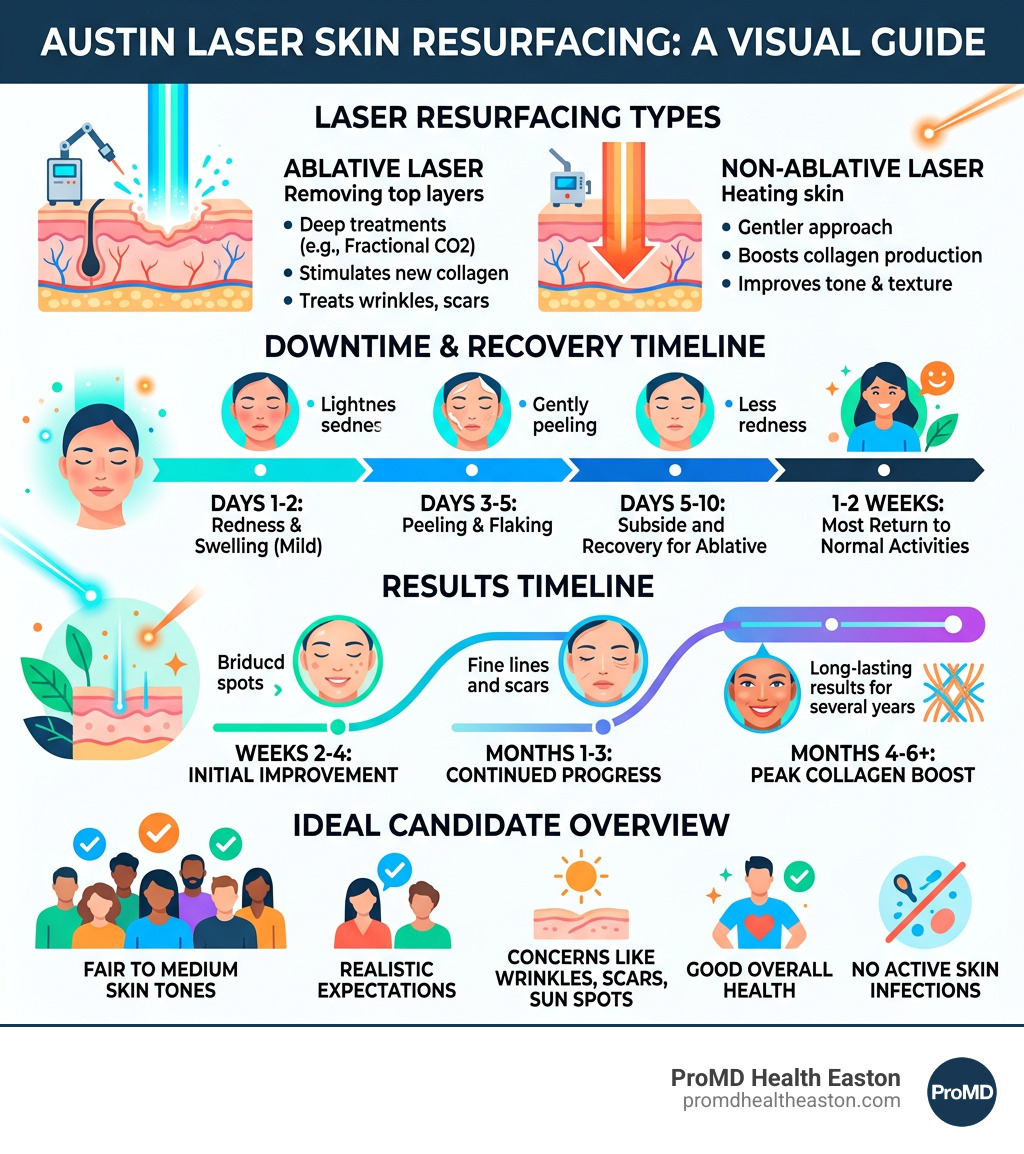
| Downtime? | 5–10 days for deeper treatments; as little as 1–2 days for lighter passes |
| How many sessions needed? | Often just one; some patients opt for a second session after 6 months |
| When do you see results? | Visible improvement within weeks; skin continues improving for 4–6 months |
| Who is a good candidate? | Fair to medium skin tones with realistic expectations and no active skin infections |
By your 40s, hormonal shifts, sun exposure, and natural collagen loss start to show on your skin — even when you’ve taken good care of it. Laser resurfacing is one of the most effective tools available today to reverse those changes without surgery or significant downtime. Residents of Easton, MD, no longer need to travel to major hubs like Austin to achieve these results.
I’m Brian R. Baker, M.D., MBA, FACEP, a physician trained at Johns Hopkins with a background in both clinical medicine and aesthetic practice — and I regularly help patients evaluate whether austin laser skin resurfacing is the right fit for their skin goals and lifestyle. In the sections below, I’ll walk you through everything you need to make a confident, informed decision.
Understanding the Technology Behind Austin Laser Skin Resurfacing
; Fractional CO2 laser; UltraPulse technology; Ablative vs. Non-Ablative; Collagen stimulation; Epidermal resurfacing; Clinical studies on 10,600nm wavelengths; More info about laser services; Faster healing times; Deep tissue remodeling
To understand how austin laser skin resurfacing works, you have to think of your skin as a biological canvas that is constantly renewing itself. Laser technology simply speeds up and directs that renewal process with incredible precision.
At its core, the procedure uses a high-energy beam of light to target specific skin concerns. There are two primary ways these lasers interact with your tissue:
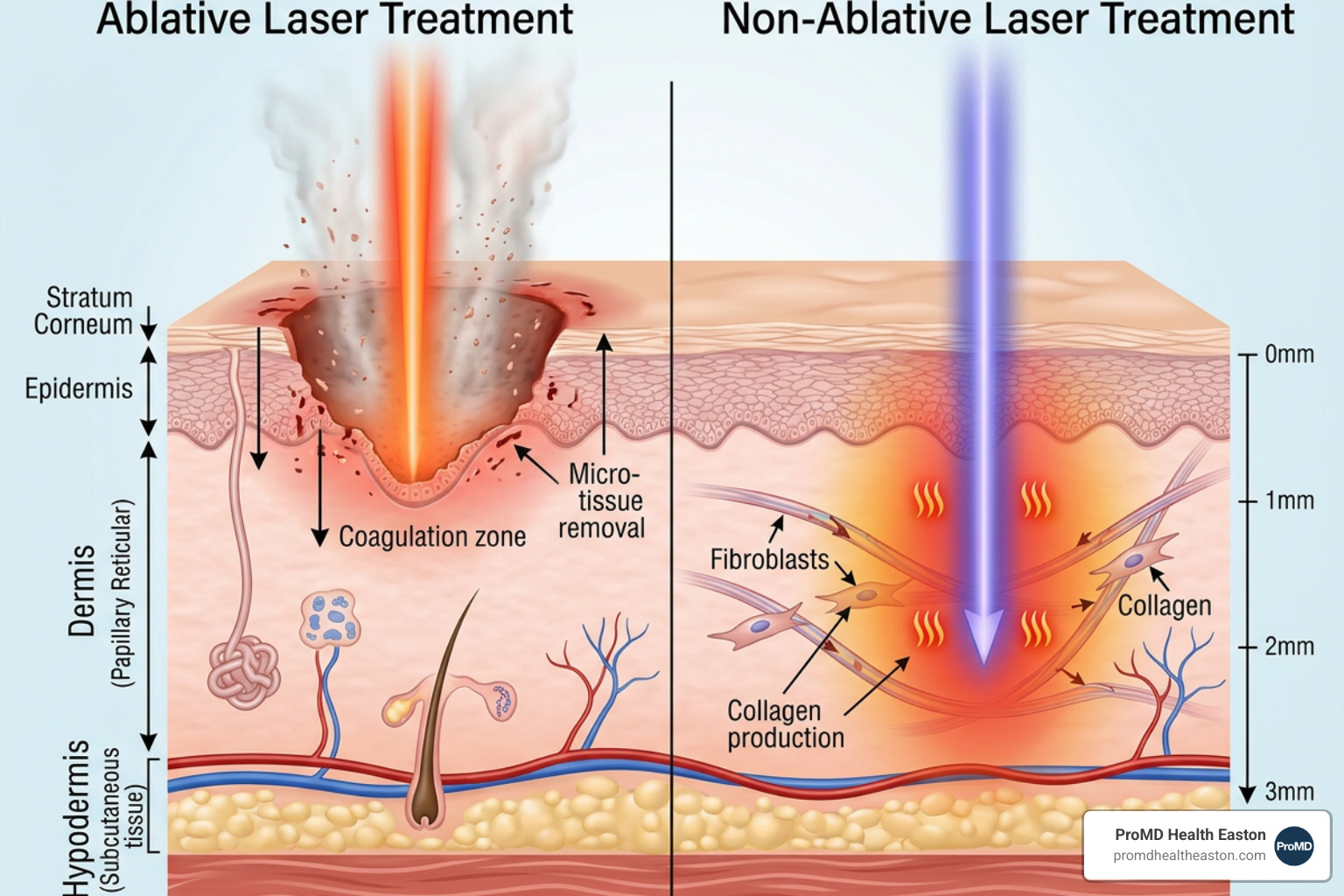
- Ablative Lasers: These are the “heavy hitters.” They remove the outer layer of skin (the epidermis) while heating the underlying skin (the dermis). This dual action triggers a significant healing response. The gold standard in this category is the CO2 laser, which is highly effective for deep wrinkles and significant scarring.
- Non-Ablative Lasers: These work by heating the underlying skin tissue without damaging the surface. Because the “barrier” of the skin remains intact, the downtime is much shorter, though you may need more sessions to reach your ultimate goal.
A major breakthrough in this field is “fractional” technology. In the past, lasers treated 100% of the skin’s surface, which led to long, painful recoveries. Modern fractional lasers, like the UltraPulse CO2, treat only a fraction of the skin at a time. They create microscopic columns of thermal injury while leaving “bridges” of untouched skin in between. These untouched areas act as a reservoir for rapid healing, allowing your skin to regenerate much faster than older methods permitted.
The Power of Collagen Stimulation
The real magic happens beneath the surface. When the laser heat hits the dermis, it causes immediate shrinkage of existing collagen fibers, which provides an instant tightening effect. More importantly, it “tricks” the body into thinking it has been injured, which kickstarts a massive production of new collagen and elastin. This is why your skin continues to look better 4 to 6 months after the procedure—you are literally growing newer, stronger skin from the inside out.
Research published in the Journal of Cosmetic and Laser Therapy confirms that fractional CO2 lasers significantly improve skin texture by inducing controlled thermal injury, leading to the following benefits:
- Fractional delivery for faster healing
- Deep dermal penetration for scar revision
- Customizable energy settings for patient safety
Comparing the Different Types of Austin Laser Skin Resurfacing
; Fractional CO2; ActiveFX; DeepFX; TotalFX; ResurFX; UltraPulse; Comparison Table; Laser Depth Diagram
Not all lasers are created equal. When you look into austin laser skin resurfacing, you will encounter several different brand names and technologies. Choosing the right one depends entirely on your skin type and the severity of the issues you want to fix.
The UltraPulse CO2 Family
This platform is widely considered the gold standard for versatility. It offers different modes depending on how deep the treatment needs to go:
- ActiveFX: This targets the upper layer of the skin (the epidermis). It is fantastic for fine lines, evening out skin tone, and shrinking pores.
- DeepFX: This goes much deeper into the dermis. It is designed to tackle deep wrinkles, skin laxity, and stubborn scars.
- TotalFX: This is the “ultimate” treatment that combines both ActiveFX and DeepFX in a single session. It addresses both surface texture and deep structural issues.
- SCARR FX: A specialized mode that can penetrate up to 4 mm in a single pulse, making it powerful enough to treat thick surgical or trauma scars.
ResurFX: The Non-Ablative Alternative
For those who cannot afford a week of downtime, ResurFX is a popular choice. Unlike CO2 lasers, it does not remove the skin’s surface. It uses a single-pass technique to channel heat into the deeper layers. This makes it safer for patients with darker skin tones who might otherwise be at risk for pigment changes with more aggressive lasers.
| Laser Mode | Target Layer | Primary Benefit |
|---|---|---|
| ActiveFX | Epidermis | Tone and Texture |
| DeepFX | Deep Dermis | Wrinkles and Scars |
| TotalFX | Combined | Full Rejuvenation |
What Can Austin Laser Skin Resurfacing Actually Treat?
; Acne scars; Sun damage; Hyperpigmentation; Fine lines and wrinkles; Skin laxity; Actinic keratosis; Treatment Benefits; More info about chemical peels; More info about microneedling
One of the reasons austin laser skin resurfacing has become so popular is its “multitasking” ability. Rather than just fixing one problem, a single session can address a whole host of concerns simultaneously.
- Fine Lines and Deep Wrinkles: By stimulating collagen, lasers effectively “fill in” lines around the eyes (crow’s feet) and mouth (smoker’s lines).
- Acne and Surgical Scars: The laser breaks down the thick, fibrous bands of collagen that make up scar tissue and replaces them with smoother, more organized skin cells.
- Sun Damage and Pigmentation: The light energy targets melanin, helping to erase sun spots, age spots, and even some types of melasma.
- Uneven Texture and Pores: By resurfacing the epidermis, the treatment leaves the skin feeling baby-soft and significantly reduces the appearance of enlarged pores.
- Pre-Cancerous Lesions: Some ablative lasers can treat actinic keratosis (scaly patches), helping to improve skin health while enhancing its appearance.
Key benefits of the treatment include:
- Smoothing of fine lines and deep wrinkles
- Improvement of acne and surgical scars
- Correction of sun damage and pigmentation
- Refinement of uneven texture and pores
While lasers are incredibly powerful, we often suggest combining them with other treatments for a total transformation. For instance, dermal fillers can restore volume that lasers can’t, while Botox can prevent new wrinkles from forming by relaxing the muscles underneath the newly resurfaced skin.
Are You a Good Candidate for Austin Laser Skin Resurfacing?
; Skin types; Medical history; Darker skin tones; Contraindications; Smoking; Candidacy Checklist; Candidate Summary Infographic
While we wish we could offer austin laser skin resurfacing to everyone, safety is our top priority. Laser energy interacts differently with different skin types, and your medical history plays a huge role in how well you will heal.
Ideal Candidates
You are likely a great candidate if you meet the following criteria:
- Fitzpatrick Scale I-III (fair to medium skin tones)
- Good overall health and immune system
- Non-smoking status (or willing to quit temporarily)
- Realistic expectations about the recovery process
Who Should Be Cautious?
- Darker Skin Tones: Patients with very dark skin (Fitzpatrick IV-VI) have a higher risk of “post-inflammatory hyperpigmentation” or permanent lightening of the skin. For these patients, we often recommend non-ablative options like ResurFX or microneedling instead.
- Active Skin Infections: If you have an active acne breakout or a cold sore, you must wait until it is fully cleared. Laser treatments can spread infections across the entire face.
- Certain Medications: If you have taken Accutane in the last 6 to 12 months, your skin’s healing response may be compromised.
- Medical Conditions: Conditions like lupus or certain connective tissue disorders may make laser treatments unsafe.
Candidacy Summary: Most patients with light to medium skin tones and moderate aging concerns are excellent candidates for this procedure.
Preparing for Your Treatment and What to Expect During the Procedure
; Pre-treatment care; Numbing cream; Procedure duration; Sensation; Step-by-Step Preparation; More info about facials
The success of your austin laser skin resurfacing depends heavily on how you prepare in the weeks leading up to your appointment.
The Preparation Phase
- Sun Protection: Avoid the sun like it’s your job for at least 2–4 weeks before treatment. A tan (even a fake one) can lead to burns.
- Skincare Adjustments: Stop using Retin-A, glycolic acids, or harsh acne creams about a week before your session.
- Medication: If you are prone to cold sores, we will prescribe an antiviral medication to start taking the day before to prevent a flare-up.
Step-by-Step Preparation:
- Strict sun avoidance for 2-4 weeks
- Discontinuation of Retin-A and acids
- Starting antiviral medication if prescribed
- Hydrating the skin and body
On the Day of Treatment
A full facial treatment usually takes between 45 and 90 minutes. When you arrive, we will apply a strong topical numbing cream. For deeper treatments, we may also use local anesthetic injections or “nerve blocks” to ensure you are comfortable.
During the procedure, you’ll wear protective eyewear. Most patients describe the sensation as a series of warm “snaps” (like a rubber band) or a prickly, stinging heat. Thanks to modern cooling technology and numbing agents, the discomfort is usually very manageable.
The Road to Recovery: Post-Treatment Care and Results
; Healing timeline; Swelling and redness; Sun protection; Moisturizing; Post-Care Essentials; Recovery Milestones; More info about skincare supplements
Recovery is the part most people worry about, but if you follow our instructions, it is a straightforward process. Think of the recovery as a “deep sunburn” phase.
The Healing Timeline
- Days 1–2: Your skin will feel hot, tight, and red. Swelling is common, especially around the eyes.
- Days 3–5: The “bronzing” phase. Your skin may turn a darker, brownish color and start to flake or peel. Do not pick! Picking can lead to scarring.
- Days 7–10: Most of the peeling is done. Your new skin will be pink and sensitive, but you can usually start wearing makeup again at this point.
- Weeks 2–12: The pinkness gradually fades. You must wear broad-spectrum SPF 30+ every single day, as your new skin is extremely vulnerable to UV damage.
| Recovery Milestone | What to Expect |
|---|---|
| Swelling | Peaks at 48 hours, usually gone by day 7 |
| Peeling | Typically starts day 3 and ends by day 5-6 |
| Redness | Resolves for most by day 8, though a slight pinkness can linger |
| Social Downtime | 5–8 days for TotalFX; 1–2 days for lighter treatments |
Post-Care Essentials
- Keep skin hydrated with Aquaphor or Vaseline
- Use gentle, non-soap cleansers
- Apply broad-spectrum SPF 30+ daily
- Avoid picking or peeling the skin manually
We recommend keeping the skin “soggy” with Aquaphor or Vaseline for the first few days. This creates a barrier that prevents scabbing and allows new skin cells to migrate across the surface more easily. Gentle cleansing with a non-soap cleanser is also vital.
Costs and Choosing a Provider for Austin Laser Skin Resurfacing
; Pricing factors; Treatment sessions; ProMD Health Easton; Med AI Simulator; Cost Breakdown; More info about our services
The cost of austin laser skin resurfacing varies based on the technology used and the size of the area being treated. A light “laser peel” on just the eyes will be significantly less expensive than a full-face TotalFX treatment. On average, you can expect to pay anywhere from $500 for minor spot treatments to $3,000+ for intensive, full-face ablative resurfacing.
When choosing a provider, look for experience and technology. At ProMD Health Easton, we pride ourselves on offering a comprehensive suite of aesthetic and wellness services. Whether you are visiting us in Easton, MD, or one of our other locations like Cambridge, Salisbury, or Chestertown, we focus on customized results.
One of our unique tools is the Entity Med AI Simulator. This allows you to preview your customized results before we even start the laser. It takes the guesswork out of the process and helps us align our treatment plan with your specific aesthetic goals.
Cost Breakdown Factors:
- Size of the treatment area
- Specific laser technology used (e.g., TotalFX vs. ResurFX)
- Number of sessions required for optimal results
- Provider expertise and geographic location
Final Thoughts
Austin laser skin resurfacing is a powerful investment in your confidence. While the downtime requires a bit of planning, the results—smoother texture, fewer wrinkles, and a radiant glow—can last for years. If you’re ready to see what’s possible for your skin in the Easton, MD area, we invite you to Register for an appointment or Download our SkinGym App today to explore our membership benefits.
Whether you’re looking for B12 shots to boost your energy or a full skin transformation, our team is here to guide you every step of the way. Your journey to better skin starts with a single consultation.