

How Much Do Cosmetic Fillers Cost? Here’s What to Expect
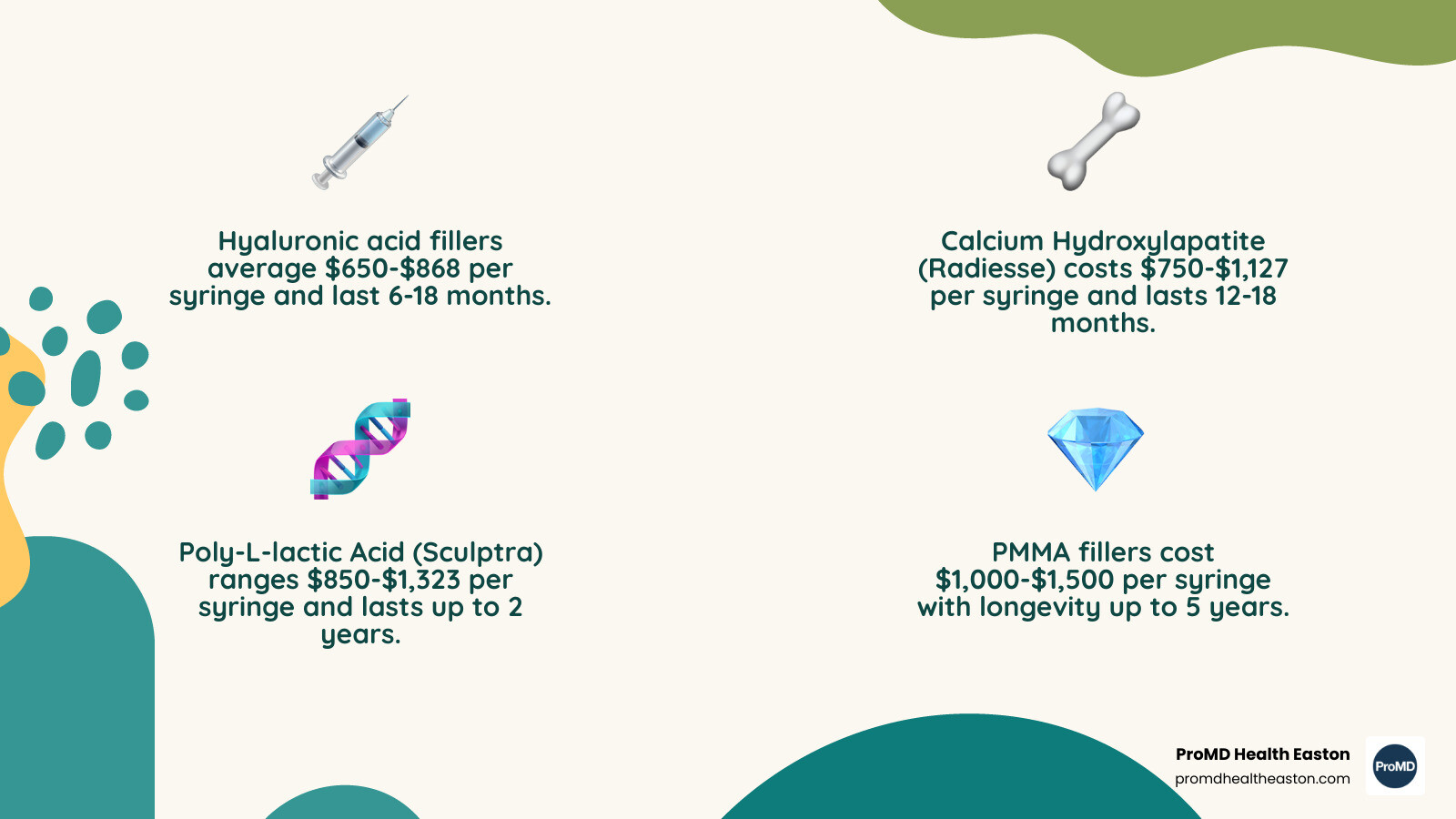
Cosmetic fillers cost between $500 and $1,500 per syringe in the United States, depending on the brand, treatment area, and your provider’s expertise. Here’s a quick snapshot:
| Filler Type | Average Cost Per Syringe | How Long It Lasts |
|---|---|---|
| Hyaluronic Acid (e.g., Juvederm, Restylane) | $650 – $868 | 6 – 18 months |
| Calcium Hydroxylapatite (Radiesse) | $750 – $1,127 | 12 – 18 months |
| Poly-L-lactic Acid (Sculptra) | $850 – $1,323 | Up to 2 years |
| Polymethylmethacrylate (PMMA) | $1,000 – $1,500 | Up to 5 years |
Most people need 1 to 3 syringes per treatment area, so total session costs commonly range from $700 to $3,500, depending on how many areas are treated.
As we get into our 40s, it’s natural to notice the face losing a little fullness — hollowing under the eyes, softer cheekbones, or lines that weren’t there before. Dermal fillers are one of the most popular non-surgical options for restoring that volume and refreshing your appearance without surgery or significant downtime. But before booking a treatment, it makes sense to understand exactly what you’re paying for and why prices vary so much from one clinic to the next.
That’s exactly what this guide breaks down — from brand-by-brand pricing to treatment area estimates and how to find a provider you can actually trust.
I’m Brian R. Baker, M.D., MBA, FACEP, Medical Director of ProMD Health Easton, and my background in emergency medicine, physician leadership, and aesthetic practice gives me a grounded, patient-first perspective on cosmetic fillers cost and value. I’ll walk you through everything you need to make a confident, informed decision.
What Are Dermal Fillers and How Do They Work?
If you have ever wondered why some people seem to age “backward” without ever looking like they had surgery, the answer is often dermal fillers. These are gel-like solutions injected under the skin to plump up areas that have lost volume, soften deep creases, and enhance facial contours.
Most fillers we use today are made from Hyaluronic Acid (HA). This is a substance your body already produces naturally to keep your skin hydrated and voluminous. Think of HA as a molecular sponge; it can hold up to 1,000 times its weight in water, which is why it’s so effective at creating a supple, youthful look. When we inject these gels, they immediately fill in the “gaps” left by aging or weight loss.
However, not all fillers work the same way. While HA fillers provide instant volume, other types act as biostimulators. These formulas, like Sculptra, actually trigger your body’s own collagen production. Instead of just filling a hole, they help your skin rebuild its structural foundation over several months.
According to FDA information on dermal fillers, these medical devices are intended to create a smoother or fuller appearance in the face, including nasolabial folds (the “parentheses” around the mouth), cheeks, and lips. Because they are minimally invasive, they offer a “no-downtime” alternative to traditional facelifts. You can learn more about the specific dermal filler services we offer to see which might be right for your unique facial anatomy.
Breaking Down the Cosmetic Fillers Cost by Brand and Type
When you look at a menu of aesthetic services, the variety of brands can be overwhelming. Each brand usually has a “family” of products designed for different tissue depths. For example, a filler meant for the lips needs to be soft and flexible, while a filler for the jawline needs to be sturdy and structural.
The cosmetic fillers cost you see on a quote is typically “per syringe.” A standard syringe contains 1.0 mL of product—which is only about one-fifth of a teaspoon! It’s incredible how much of a difference that small amount can make when placed precisely.
| Brand | Typical Price Per Syringe | Primary Use Case |
|---|---|---|
| Juvederm Ultra/Ultra Plus | $650 – $800 | Lips and smile lines |
| Juvederm Voluma | $975+ | Cheeks and chin (high density) |
| Restylane L/Lyft | $650 – $750 | Mid-face and nasolabial folds |
| RHA Collection | $775 – $850 | Dynamic areas (mouth/eyes) |
| Radiesse | $750 – $950 | Jawline and hand rejuvenation |
| Sculptra | $850 – $1,200 | Global facial volume (collagen growth) |
Based on Dermal Fillers Cost Statistics, the national average for HA fillers is around $715, but these prices fluctuate based on the specific formulation and the complexity of the injection.
Hyaluronic Acid Cosmetic Fillers Cost
Hyaluronic acid fillers remain the gold standard for most first-time patients. Why? Because they are reversible. If for any reason you aren’t thrilled with the result, we can use an enzyme called hyaluronidase to dissolve the filler almost instantly. This safety net makes them a very low-risk entry point into aesthetics.
Popular brands like Juvederm, Restylane, and the newer RHA family typically range from $500 to $800 per syringe. The RHA (Resilient Hyaluronic Acid) line is particularly interesting because it’s designed to move with your face, making it look incredibly natural when you smile or talk. At ProMD Health, we often combine these with other “wrinkle relaxers” to achieve a comprehensive refresh. You can find more info about Botox and complementary injectables to see how they work together to smooth both static and dynamic lines.
Non-Hyaluronic Acid and Biostimulatory Filler Pricing
If you are looking for longevity, you might consider non-HA fillers like Radiesse or Sculptra.
- Radiesse uses Calcium Hydroxylapatite (CaHA) microspheres. It’s thicker than HA and is fantastic for “building” a jawline or chin. It typically costs between $750 and $1,127 per vial.
- Sculptra is made of Poly-L-lactic Acid (PLLA). Unlike other fillers, you won’t see the full result the day you leave the office. Instead, it works over 3 to 4 months to stimulate your own collagen. It’s an investment in your skin’s future, often costing $850 to $1,300 per vial, with results lasting up to two years.
Factors That Influence Your Total Treatment Price
If you call three different clinics in Maryland, you will likely get three different prices. This isn’t because the product itself costs more in one place; it’s because you aren’t just paying for the gel in the syringe. You are paying for the hands holding the needle.
Several key factors influence the cosmetic fillers cost:
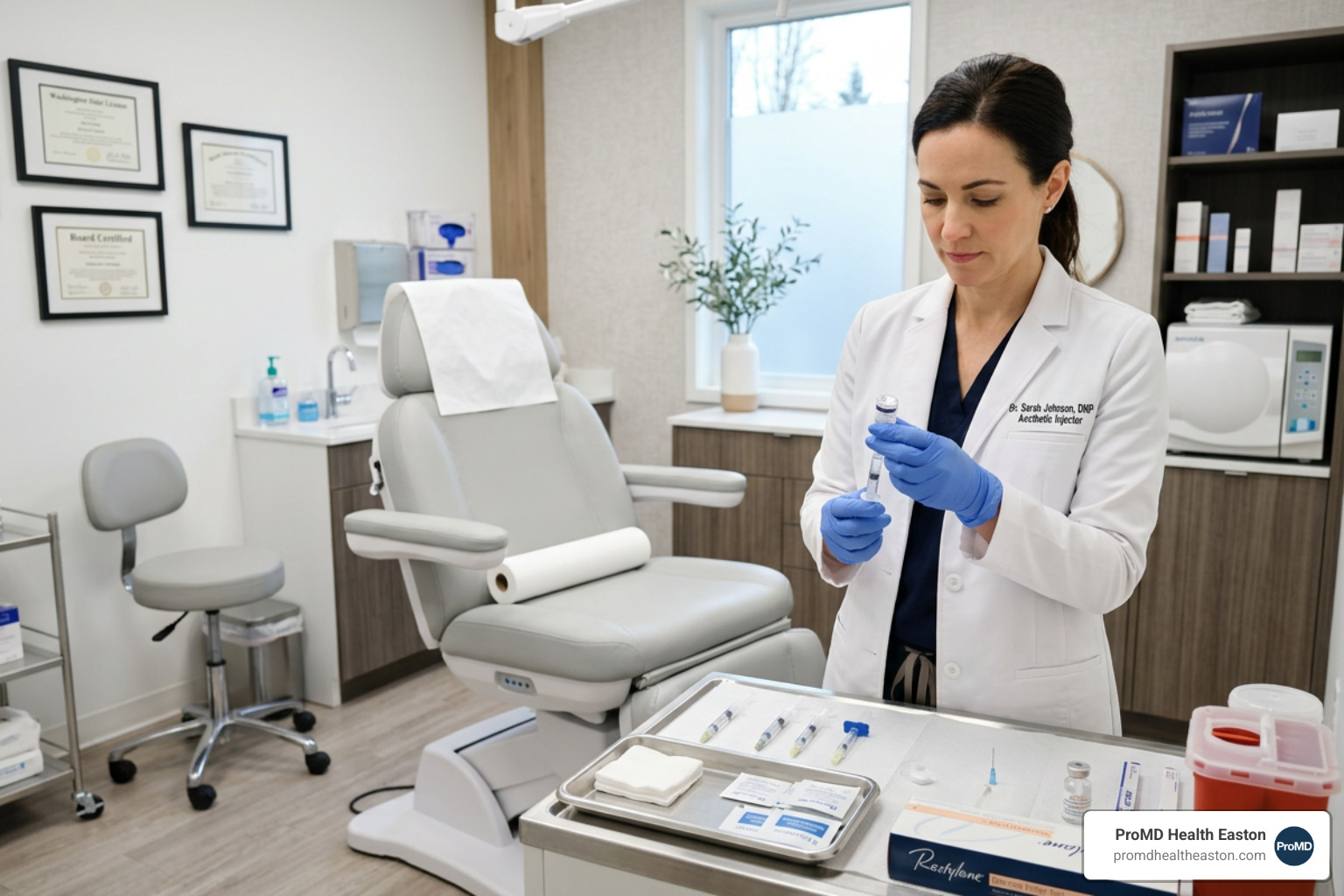
- Provider Expertise: A board-certified specialist with years of experience will charge more than a “weekend injector.” This is one area where you definitely don’t want to bargain hunt.
- Product Type: Thicker, longer-lasting fillers like Juvederm Voluma naturally cost more than thinner “entry-level” fillers.
- Treatment Complexity: Filling a simple lip line is different than a full “liquid facelift” that requires advanced anatomical knowledge to avoid blood vessels and nerves.
Regional Variations in Cosmetic Fillers Cost
Geography plays a huge role in what you’ll pay. In high-cost coastal metros like New York or Los Angeles, you might see syringes priced at $1,200 or more.
Here in Maryland, the average cost for hyaluronic acid fillers sits around $941 per syringe. In more suburban or midsize city markets like Easton, Cambridge, or Salisbury, prices tend to be more accessible than in the heart of Baltimore or D.C., but they still reflect the high standard of care expected in the Northeast. Generally, urban markets carry a 10% to 25% price delta over more rural areas due to higher overhead and practitioner demand.
The Impact of Injector Skill and Safety
We have all seen the “horror stories” on the news—lumpy lips or, worse, serious complications like vascular occlusion. These almost always stem from two things: lack of anatomical knowledge or the use of counterfeit products.
Choosing a provider based solely on the lowest cosmetic fillers cost is a dangerous game. Inexperienced injectors may lack the deep understanding of facial fat pads and artery placement required for a safe result. Furthermore, ultra-low prices can sometimes signal that a clinic is using “gray market” or diluted products.
As noted in the FDA safety warnings on fillers, it is vital to ensure your provider uses only FDA-approved, high-quality fillers. At ProMD Health Easton, we prioritize safety and natural-looking results above all else. We would rather use less product and have you come back for a touch-up than overfill or use sub-par materials.
Average Cost by Treatment Area: Lips, Cheeks, and Beyond
One of the most common questions we get is, “How many syringes will I actually need?” It’s hard to give a one-size-fits-all answer because every face is a different “canvas,” but we can provide some general estimates based on common goals.
Estimating Your Total Cosmetic Fillers Cost for Full Facial Balancing
“Facial balancing” is the art of looking at the face as a whole rather than just fixing one wrinkle. If we only fill your lips but your chin is recessed, the proportions will look “off.”
- Lip Augmentation: Usually requires 1 syringe ($700 – $1,200 total).
- Cheek Contouring: Often requires 1 syringe per side ($1,300 – $2,400 total).
- Jawline Definition: Can require 2 to 4 syringes to create a sharp, defined edge ($1,300 – $3,200 total).
- Under-Eye Hollows (Tear Troughs): Usually 1 syringe split between both sides ($650 – $1,600 total).
- Liquid Rhinoplasty: A non-surgical nose job typically uses less than 1 syringe but requires high skill ($800 – $1,500).
Syringe Estimates for Common Procedures
To help you budget, here is a breakdown of the typical amount of product (in mL/syringes) used per area:
- Lips: 1.0 – 2.0 mL
- Cheeks: 2.0 – 4.0 mL
- Chin: 2.0 – 4.0 mL
- Nasolabial Folds: 1.0 – 2.0 mL
- Temples: 2.0 mL
While you’re focusing on volume, don’t forget that skin texture matters too. Often, our patients find that combining fillers with chemical peels for skin texture helps the filler results look even more radiant by smoothing the “top layer” of the skin.
Longevity, Maintenance, and Financing Options
Dermal fillers are not permanent—and in many ways, that’s a good thing! Our faces change as we age, and a permanent filler that looks good today might look strange ten years from now.
Most fillers last between six to eighteen months. However, your individual metabolic rate plays a huge role. If you have a very high metabolism or are very physically active, your body might break down the filler faster. Areas with a lot of movement (like the lips) also tend to dissipate faster than “static” areas like the cheeks.
According to research on how long fillers last, maintenance is key. Many patients find that their second or third treatment requires less product because the previous filler has created a “base” or stimulated some natural collagen.
Because cosmetic fillers cost can be a significant upfront investment, we offer several ways to make it more manageable:
- CareCredit: A healthcare credit card that allows for monthly payments.
- Cherry Payment Plans: A quick, “buy now, pay later” option with high approval rates and 0% APR options for those who qualify.
- Allē Rewards: The loyalty program for Juvederm and Botox. You earn points on every treatment that you can use as cash toward your next visit.
Frequently Asked Questions about Cosmetic Fillers Cost
Are dermal fillers covered by health insurance?
Generally, no. Because dermal fillers are considered elective cosmetic procedures, they are not covered by standard health insurance. The only exception is occasionally for reconstructive purposes following an accident or for specific medical conditions like facial lipoatrophy, but this is rare.
Is it cheaper to get fillers or Botox?
On a “per session” basis, Botox is usually cheaper (typically $350 – $700). However, Botox only lasts 3 to 4 months. Fillers cost more upfront ($700+) but can last up to 18 months or more. When you look at the “cost per month of beauty,” they often end up being quite similar.
How can I save money on my filler treatments?
The best way to save is to look for multi-syringe packages. Many clinics (including ours) offer a discount if you buy two or more syringes in a single session. Additionally, staying consistent with your maintenance prevents you from “starting from zero” every time, which often requires more product.
Conclusion
At the end of the day, the cosmetic fillers cost is an investment in your confidence. Whether you want to restore the cheekbones of your youth, define a soft jawline, or simply look less “tired” in the morning, fillers offer a customizable solution that fits into a busy lifestyle.
At ProMD Health Easton, we serve patients from Easton, Cambridge, Salisbury, and Chestertown with a commitment to transparency and artistry. We know that “sticker shock” is real, which is why we offer a personalized consultation to give you an exact quote before any needle ever touches your skin.
One of our favorite tools is the Entity Med AI Simulator. It allows us to give you a customized preview of your results before we even begin. You can see exactly how that extra volume in your cheeks or lips will look on your face.
Ready to see what’s possible? Schedule a consultation for dermal fillers at our Easton office today, and let’s create a plan that fits both your aesthetic goals and your budget.